BFATextiles
In hands-on, topic-driven courses, students engage with the practices and histories surrounding the discipline of textiles as it relates to issues in contemporary art practice, design, craft, and activism.
Overview
Make textile thinking radical
Explore the interdisciplinary potential of textiles and material thinking
One of the oldest aesthetic traditions in the world, textiles are currently on the cutting edge of contemporary art practice and critical inquiry. Artists working in interdisciplinary zones are picking up cloth and thread to incorporate the discipline’s creative and conceptual potential.
Textiles at CCA is an interdisciplinary Fine Arts program that introduces students to a vast range of textile construction methods—such as weaving, printing, dyeing, and handwork—through conceptual and experimentally driven frameworks. We consider textiles to be more than a way of making. It is a radical way of thinking about structure and pattern, color and material, environment and community.
Join an internationally recognized program
With a reputation for cutting-edge work, our internationally recognized Textiles program teaches you to think beyond the crafted object. Compared to other programs in the United States, our courses are topic-driven, designed to build technical skill, while promoting critical thinking, research, and problem-solving. Students are encouraged to investigate relevant issues such as the social and environmental implications of mass production, analyze the gendering of work, and interrogate systemic forms of oppression. Contemporary critical race theory, gender theory, queer theory, and slow methodologies aid in our inquiry to understand the shape of an innovative and relevant textiles practice today.
Studios & Shops
Textile practices for the 21st century
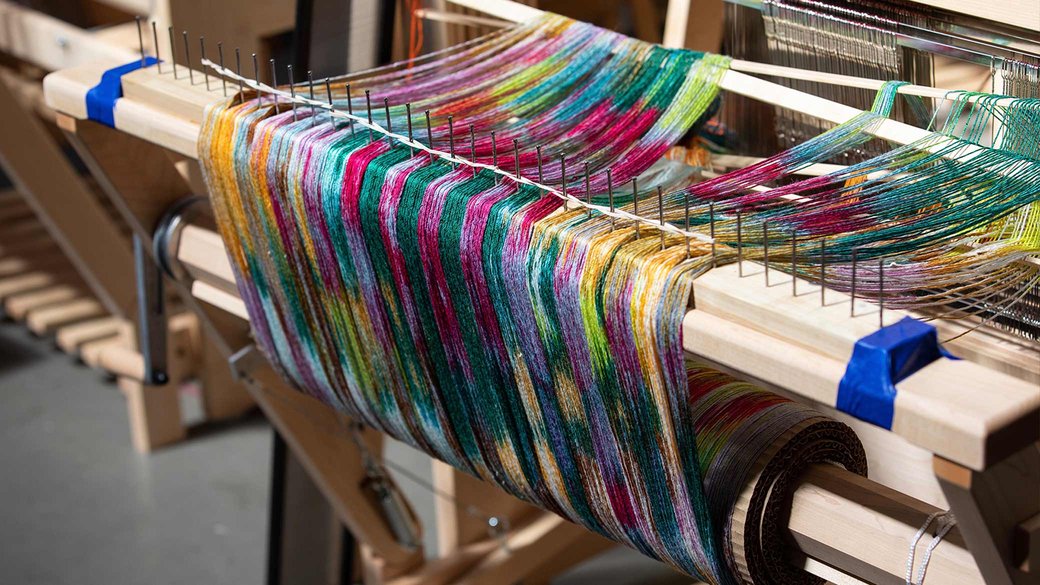
Equal parts analog and digital, our state-of-the-art studios are designed to foster a range of applications: experimental, functional, and industrial. Linear, planar, and three-dimensional forms of textile construction and surface manipulation—including low- and high-tech weaving, hand and screenprinting, natural and chemical dyeing, spinning and felting, knitting and crocheting, and stitching and embroidery—provide the backbone of our curriculum. As you refine your technical and conceptual skills, you develop a distinctive artistic voice and build a body of work that culminates in a senior exhibition.
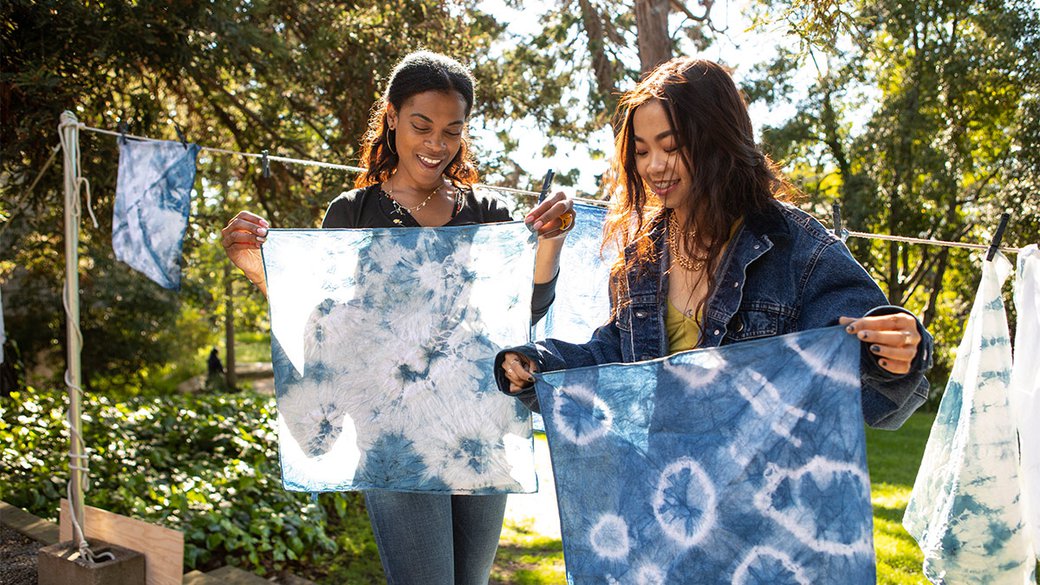
Encouraging open dialogue and a sense of community
Our Textiles program is known for its close-knit community and for its collegial and mutually supportive learning environment. The Textiles studios are a hive of activity in which students, faculty, and staff engage in critical conversations around textile history, theory, and practice. Lively lectures, discussions, and critiques within the classroom provide the intellectual backbone to our making-intensive curriculum.
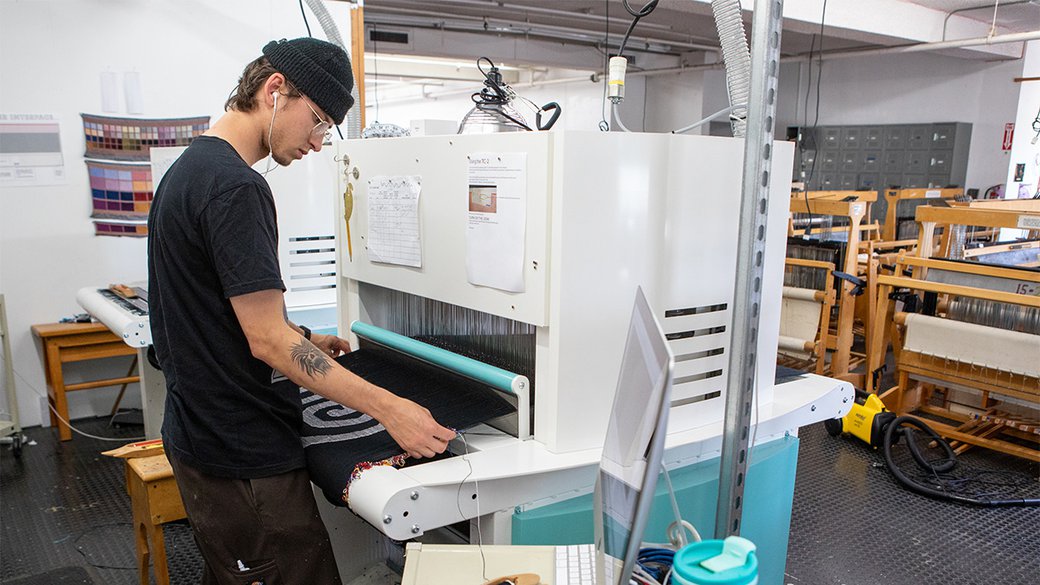
Weaving through the hand and the digital
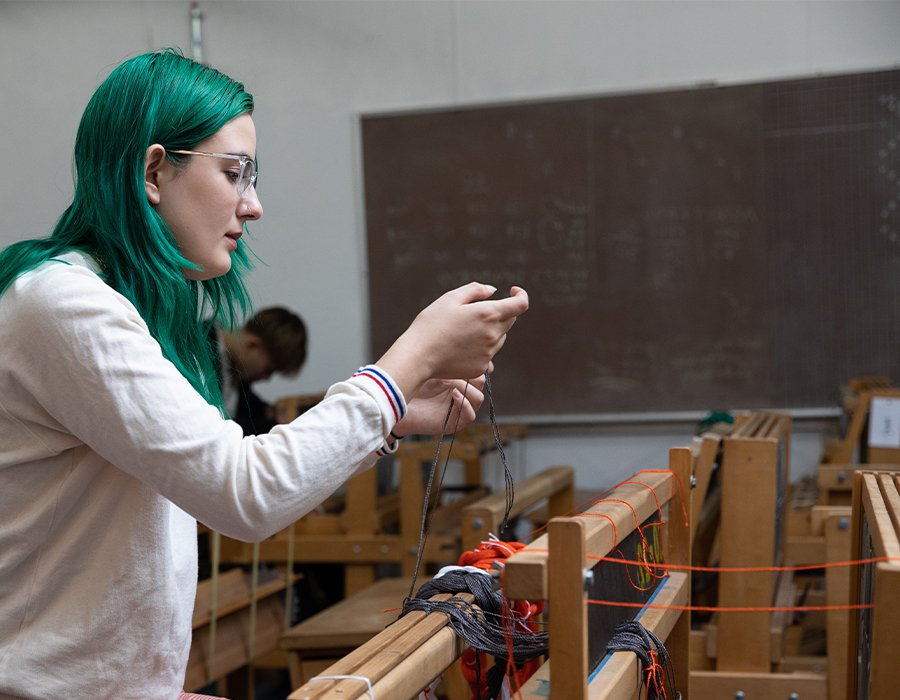
With floor looms and computer-operated dobby looms, our Weaving Studio supports our commitment to an ever-expanding rhetoric around contemporary interdisciplinary strategies that integrate fine art, design, and craft. In this regard, our looms function as tools to negotiate conversations around cloth, technology, and the body. Weaving courses such as Weaving to Dye For and Zeros+Ones highlight the intersections between hand and digital technologies.
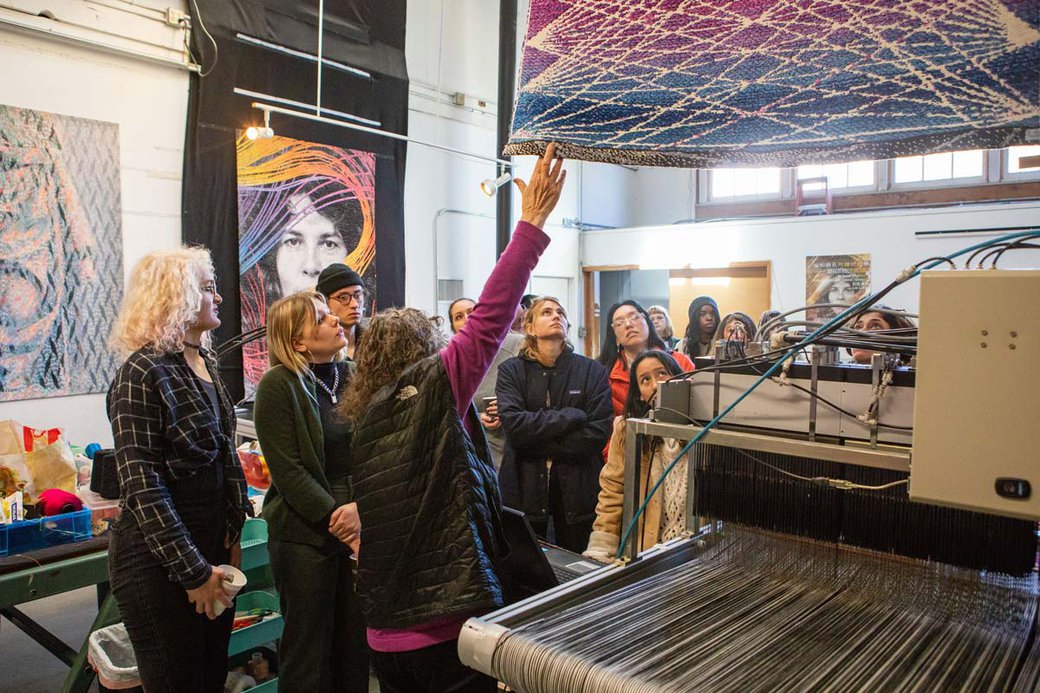
Our Textiles program is one of only a few in the United States that teaches digital weaving on hand-powered Jacquard looms for both art-based and commercial applications. Students meet alumni who use the Jacquard loom as their primary tool through the Lia Cook Jacquard Residency, learning from these artists’ experimental weaving work during studio visits, critiques, and public lectures and demonstrations. View rotating weaving courses.
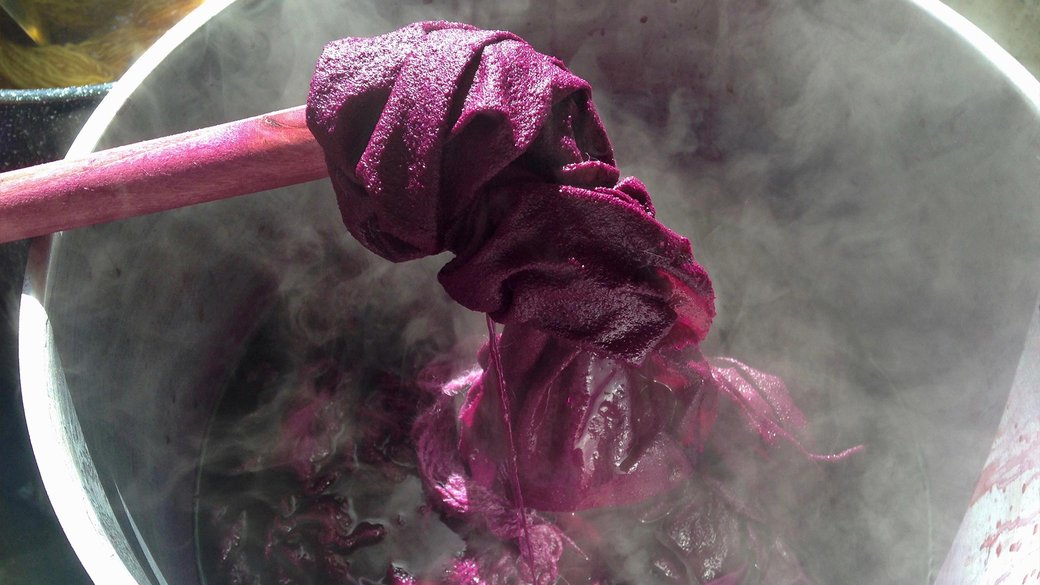
Printing meaning through imagery and pattern
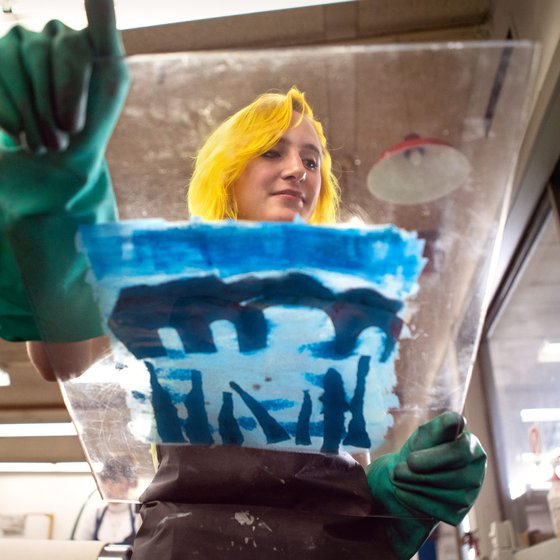
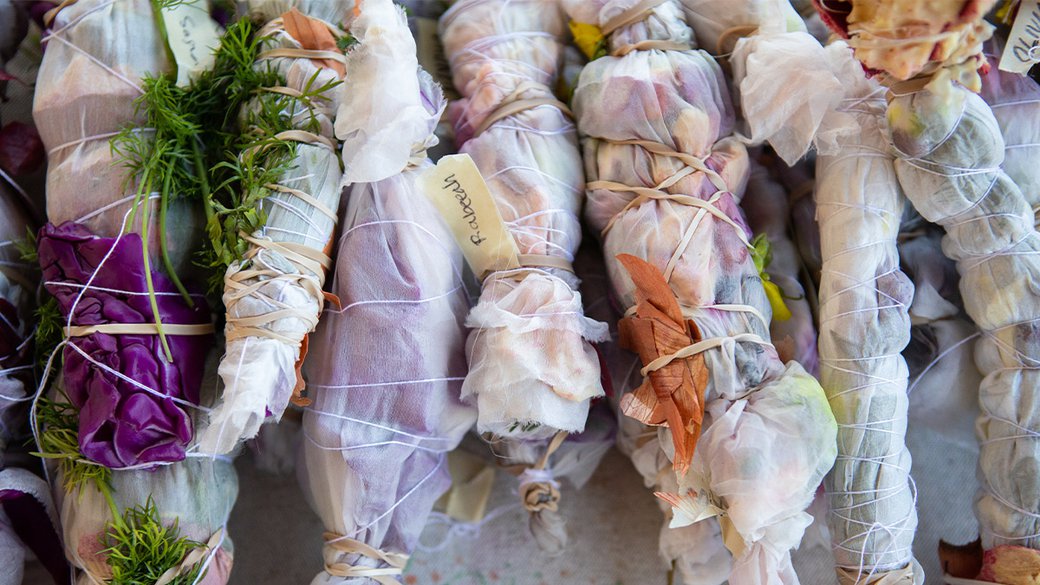
Our Print Studio and Dye Lab are outfitted with individual print stations, a production print table, a large vacuum exposure unit, and dye facilities. Print courses such as Wet + Wild and Print Witchery delve into the painterly qualities of dye on cloth and the use of visual metaphor to create meaning.
Instruction in technical skills includes natural and chemical dye technologies; hand, screen, and digital printing; engineered and repeat design; photo- and computer-generated imaging; and the complexities of screenprinted repeat patterns for applications in fine arts, fashion, and interior design. View rotating printing courses.
Harnessing the potential of string through handwork
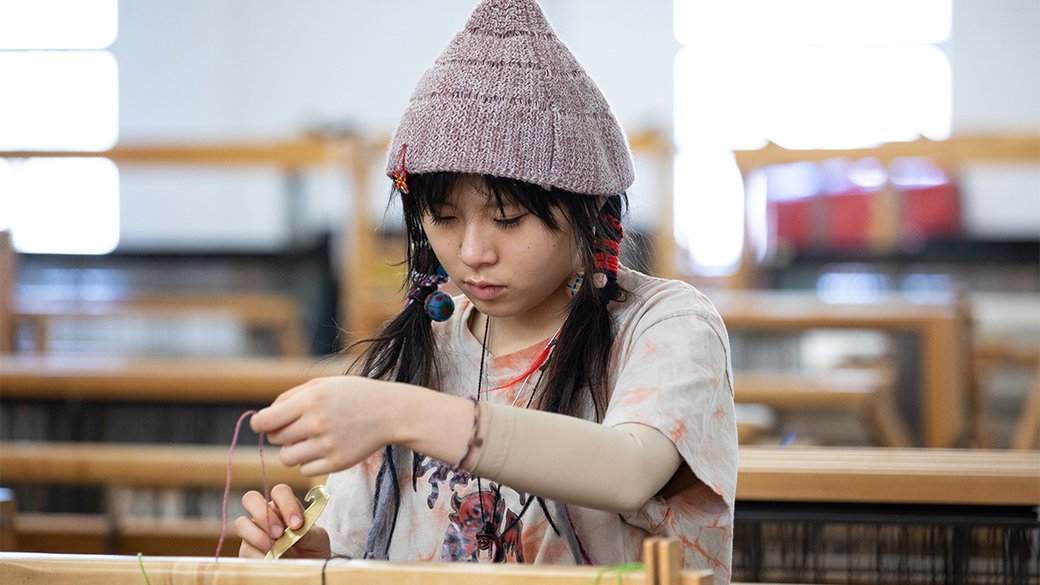
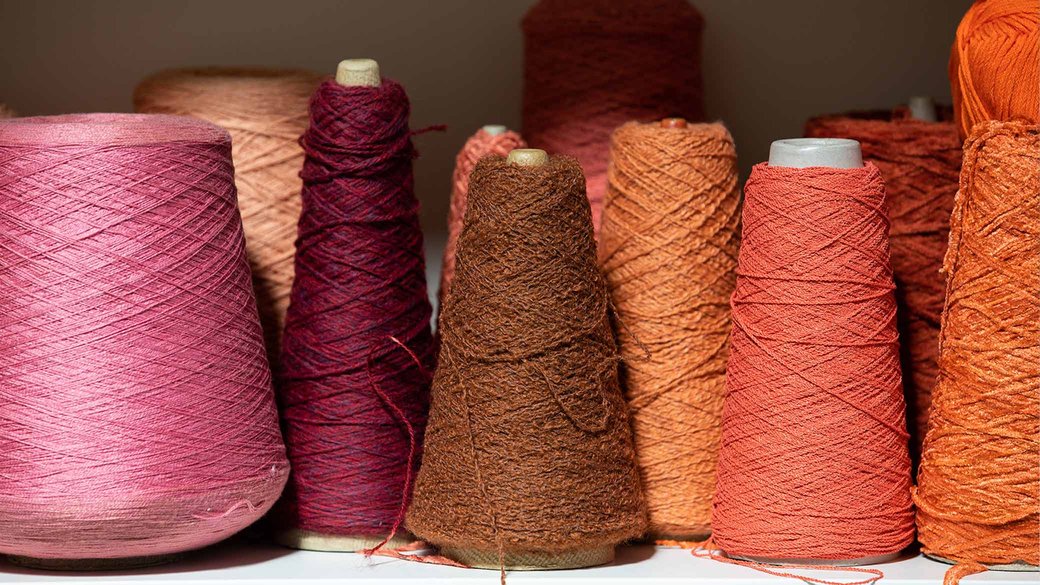
In addition to weaving and printing, our curriculum includes handwork such as spinning and felting, stitching and embroidery, and knitting and crocheting. In handwork courses such as Knitting It All Together and Narrative Stitches, you’ll be encouraged to harness the aesthetic potential of traditional forms of handwork to discuss contemporary social and political issues. View rotating handwork courses.
Studios outfitted with a range of equipment
- Two computerized TC-2 Jacquard looms
- AVL 24-harness computer-controlled dobby loom
- Multi-shaft floor looms
- Drop spindles and spinning wheels
- Dye lab
- Large-format exposure unit
- Industrial serger and sewing machine
- Light table
Additional shops, labs, and studios


Faculty
Learn from leading textiles artists
Our internationally renowned faculty have diverse studio practices. As visual artists, designers, and historians, our instructors guide students through contemporary discourse and help them develop thoughtful, nuanced creative practices.
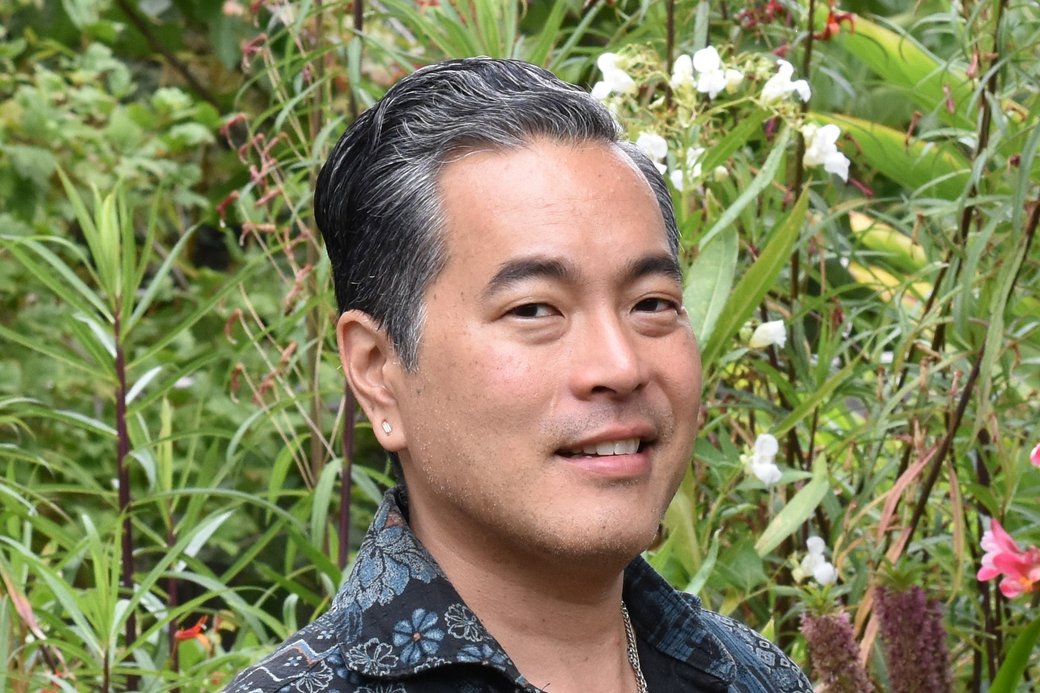
Curtis Arima, Chair of Textiles
Curtis Hidemasa Nickerson Arima is a metalsmith, jeweler, and fine artist who is drawn to the transformative nature of materials and the memory, emotion, and history that objects can hold. He earned a BFA from California College of Arts and Crafts and an MFA from Cranbrook Academy. His jewelry and sculpture has been exhibited and published nationally and internationally. He has lectured and taught workshops in the U.S., Japan, and China.
He is also on the Board of Directors of the Ethical Metalsmiths and part of their Education Committee. As a professor and chair of the Jewelry & Metal Arts, Ceramics, Sculpture, Textiles, and Individualized Studies programs at California College of the Arts, he enjoys mentoring students to find their artistic identity and connection to more sustainable practices.
His publications include Metalsmith Magazine, Sculpture Magazine, Lapidary Journal, the Lark’s 500 series books, and New Brooches. His museum exhibitions include: Fuller Craft Museum (Brockton, MA), Metal Museum (Nashville, TN), Houston Center for Contemporary Craft (Houston, TX), Ohio Craft Museum, (Columbus, OH), and New York City Jewelry Week.


Curriculum
We think with our hands
Create truly meaningful work
Textiles at CCA is one of the preeminent Textiles programs in the United States. Our curriculum combines theory and practice, intellectual engagement, and embodied learning. We offer a rotating suite of courses, and unlike traditional textile design programs, ours is rooted in a fine arts practice with a strong interdisciplinary approach. Students have the freedom to push into the expanded field of textiles, and many incorporate other disciplines in their textile making, including fashion, animation, film, performance, painting, poetry, community engagement, and more.
Textiles courses aren’t only for Textiles majors. Many of our courses are offered without prerequisites. And students from Ceramics, Fashion Design, Furniture, Graphic Design, Interior Design, Jewelry & Metal Arts, Painting, Photography, and Printmedia, among others, say that taking one or two Textiles courses enriches their education and expands their practice. A great place to start is with Introduction to Textiles, in which you are introduced to hand printing, backstrap weaving, and hand-construction techniques. View BFA Textiles curriculum overview.
Exploring diverse cultural traditions
In addition to studio courses, the hallmark of our curriculum is a comprehensive series of courses on textile history and theory. Media history courses such as Fashioning the Social Body and Constructing Identity discuss Indigenous making practices, the concepts of appropriation and authenticity, the role of textiles in industrialization and colonization, and how textiles shape gendered and ethnic identity on the body. Theory courses such as Textilities and Chromophlia investigate the metaphorical meanings of textiles and the contentious histories of color and dye. Many courses also investigate slow practices, make connections to the sources of our materials, and advocate for responsible and sustainable modes of production. View rotating history and theory courses.
The Textiles program is committed to bringing diverse voices and perspectives into the curriculum at all levels. We have hosted artists including Native American basketweavers, Tongan tapa makers, Mien embroiderers, and traditional French-lace makers, among others. Emerging from this commitment, the biennial Textiles Futures series was founded in 2006 to promote cross-cultural and intergenerational dialog geared toward locating and expanding the rhetoric around textile sensibilities and practices.
Investigate ideas through every dimension
Before diving into their chosen major, every undergraduate participates in the First Year Experience. Students explore a wide range of materials and tools over the course of two semesters. Faculty from different disciplines guide studio projects, group critiques, and theoretical discussions, setting students up for success throughout their major coursework.
BFA Textiles
Core Studio
- Drawing 1
- 3.0 units
- 2D, 3D, and 4D
- 9.0 units
Textiles Major Requirements
- Introduction to Textiles
- 3.0 units
- Level 2 Textile Studios
- 12.0 units
- Topic Seminar
- 3.0 units
- Contemporary Issues in Craft Theory
- 3.0 units
- Digital Tools Textiles
- 3.0 units
- Craft Workshop
- 3.0 units
- Level 3 Textile Studios
- 6.0 units
- Senior Project
- 6.0 units
Additional Studio Requirements
- Interdisciplinary Critique
- 3.0 units
- Interdisciplinary Studio
- 3.0 units
- Critical Ethnic Studies Studio
- 3.0 units
- Studio Electives
- 12.0 units
Humanities & Sciences Requirements
- Writing 1
- 3.0 units
- Writing 2
- 3.0 units
- Introduction to the Arts
- 3.0 units
- Introduction to the Modern Arts
- 3.0 units
- Foundation in Critical Studies
- 3.0 units
- Media History: Textiles
- 3.0 units
- Critical Ethnic Studies Seminar (2000 level)
- 3.0 units
- Literary and Performing Arts Studies (2000 level)
- 3.0 units
- Philosophy and Critical Theory (2000 level)
- 3.0 units
- Social Science/History (2000 level)
- 3.0 units
- Science/Math (2000 level)
- 3.0 units
- History of Art and Visual Culture (2000 level)
- 3.0 units
- Humanities and Sciences Electives (2000 or 3000 level, at least 6 units must be 3000 level)
- 12.0 units
Total 120.0 units
Careers
Think urgently through slow processes
Our broad curriculum prepares students to make a positive impact in multiple fields. After graduation, our students are ready to pursue careers as interdisciplinary artists, designers, entrepreneurs, activists, and community organizers. They have the skills to work within the industry and push beyond it, successfully expanding narratives about materiality and craft. Some students become designers in textile production, but many more pursue careers as fine artists and achieve international gallery representation.
Potential career paths
- Independent artist
- Independent designer
- Surface designer for industry
- Woven designer for industry
- Textile historian/cultural anthropologist
- Educator
- Political activist
News & Events
Showcasing diverse perspectives


How to Apply
Evolve your craft
Textile students are artists who want the freedom to chart their own conceptual paths. Whether you’re interested in activist-inspired work, fiber arts, or experimental modes of design thinking, you’ll find the raw materials, inspiring theoretical discussions, and supportive community to achieve your goals. Our program’s correlation to painting, printmaking, and sculpture presents you with many opportunities to investigate and expand the capacities of cloth as a tool in a range of fine arts practices.
Find your creative community at CCA